

Understanding Shivering in Ceramics
As someone who works with ceramics, glaze defects are an unavoidable part of the learning curve. One of these defects is Shivering.
What Is Shivering?
Shivering is a glaze defect that occurs when the glaze contracts more than the ceramic body during cooling. This mismatch in shrinkage places the glaze under excessive compression. When the stress becomes too great, the glaze begins to flake off the surface of the bisqueware in small, sharp slivers.
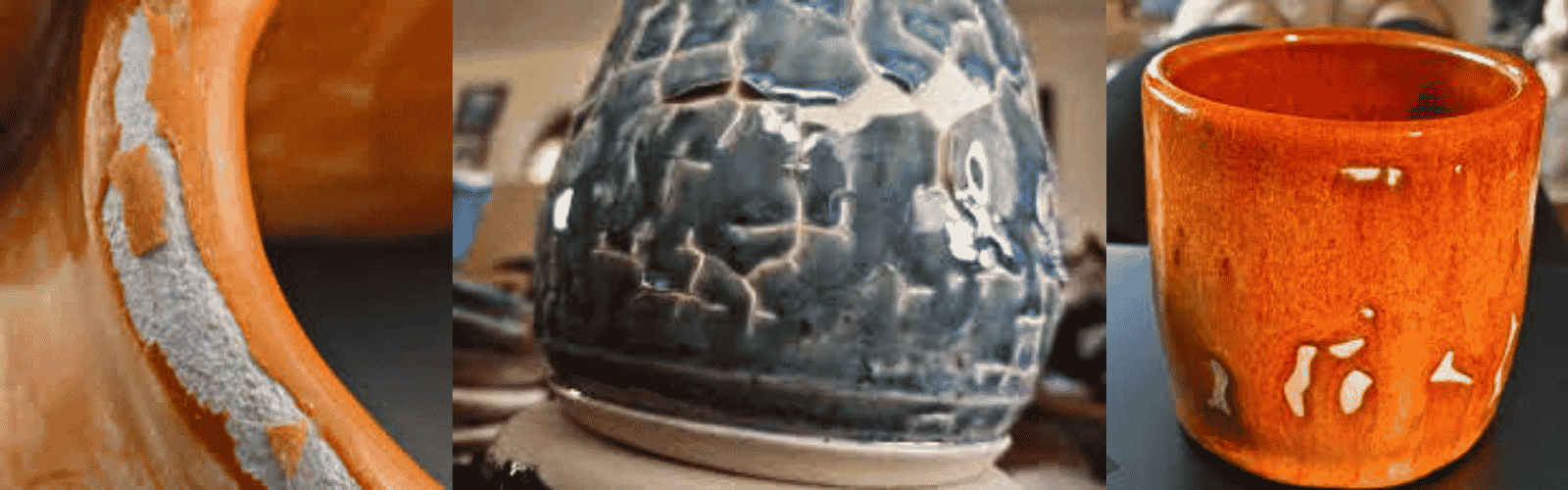
Unlike crazing which results in fine cracks shivering leads to actual loss of glaze from the piece.
Why Does It Happen?
At its core, shivering is caused by a mismatch in the thermal expansion rates of the glaze and the clay body. Several factors can contribute to this imbalance:
- Glaze formulation: Glazes with low thermal expansion tend to shrink more as they cool.
- Clay body composition: Certain clay bodies expand more during firing and contract differently during cooling.
- Firing temperature: Inconsistent or incorrect firing schedules can exaggerate the mismatch.
- Fit between glaze and body: Poor glaze fit is the fundamental issue—when the glaze simply doesn’t.
How shivering affects the end result.
- Functional failure: Pieces with shivering are not food-safe or suitable for regular use.
- Irreversibility: Once shivering occurs, it cannot be fixed. The glaze cannot be reattached or repaired effectively.
- Because of these risks, ceramic pieces exhibiting shivering are typically discarded.
How to Prevent Shivering:
Find below some practical steps to reduce the risk:
- Adjust glaze formulation: Increase the thermal expansion of the glaze by modifying its composition (for example, adjusting silica or flux levels)
- Test glaze fit: Always test new glazes on your specific clay body before full application.
- Match clay and glaze: Use glaze recipes known to work well with your chosen clay body.
- Refine firing schedules: Ensure consistent and appropriate cooling cycles to minimize stress.
- Apply glaze properly: Avoid overly thick glaze layers, which can increase stress during cooling.
Download Mayco's Shivering PDF fact and troubleshooting sheet. Shivering-PDF
Shivering is a clear reminder of how delicate the balance is between glaze and clay. While it cannot be reversed once it appears, understanding its causes allows ceramic artists to make informed adjustments and avoid future issues. With careful testing, thoughtful material choices, and attention to firing you can best avoid these issues.