

Choosing your first Kiln
Space and power requirements
Kilns take space and may need ventilation. As you scale up, you may need a dedicated area for safe setup and proper electrical supply (particularly for larger kilns). Here’s what to check and plan for:
- Voltage and circuit type: kilns require 240 V
- Amperage / breaker and dedicated circuit: medium to large pottery kilns require 30–60 amps on a dedicated circuit. That means no other appliances should share the same circuit while firing. Larger Kilns are best operated on three phase power.
- Wiring and plug type / direct wiring: For larger kilns (high amps), often you can’t just plug into a normal outlet. They may require direct wiring to a breaker, and a suitable heavy-duty outlet or hardwired connection.
- Electrical load capacity of your home/studio: Before buying, check that your property electrical supply (main panel, wiring, metering) can handle the kiln’s requirements, including possibly bringing in an electrician to install a dedicated circuit.
- Avoid extension cords: Because kilns draw high and consistent power, using an extension cord is generally unsafe. Use proper wiring and outlets.
- Ventilation and heat load: The kiln will radiate heat and may warm the room significantly. Proper ventilation makes sure that neither temperature nor fumes build up
When installing a pottery kiln, you need more than just enough room for the kiln itself. Place it on a non-combustible floor such as concrete or tile, and keep at least 45 cm of clearance on all sides. Ensure the room has good ventilation, either through windows, vents, or a mechanical exhaust system, and ideally keep the kiln in a dedicated area away from living spaces. Make sure the layout also allows safe movement when loading and unloading work. In short, allow proper clearance, safe flooring, good airflow, and adequate working space around your kiln.
Capacity vs frequency
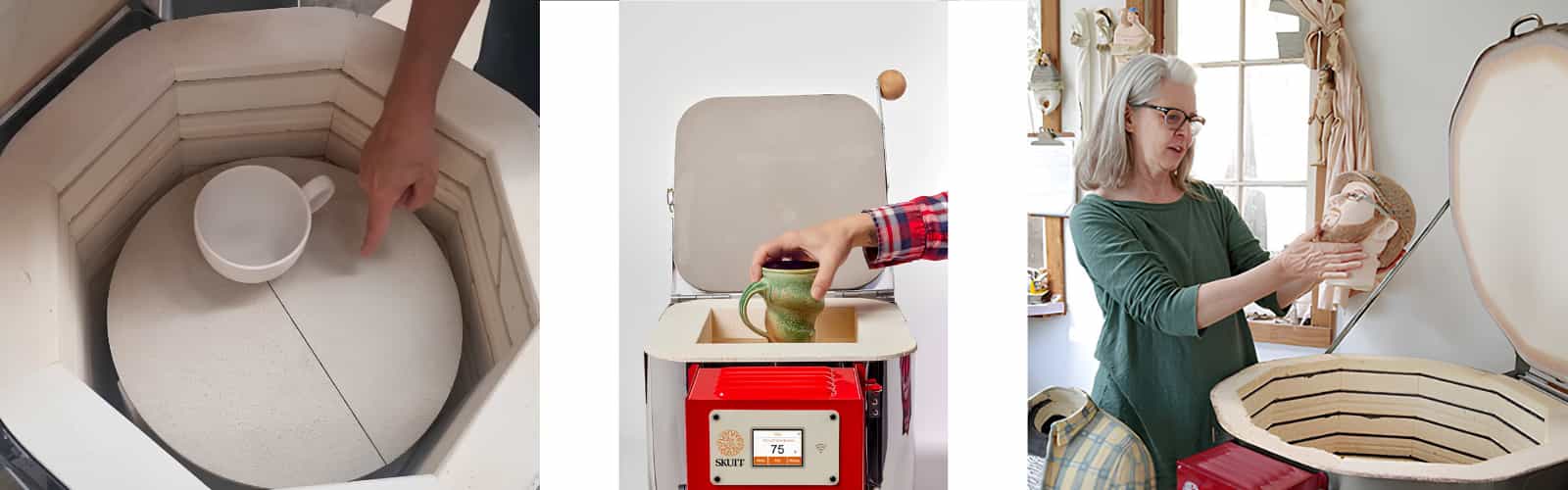
Think about how often you plan to fire and what size pieces you want to make. If you fire only small items every now and then, a compact kiln will usually meet your needs. But if you expect pottery to become a regular hobby or small business, choosing a larger kiln with more capacity will save time, reduce the number of firings, and prevent the need to upgrade too soon.
Ease of use and control
Electronic controllers make kiln firing easier, safer, and more consistent. Instead of manually adjusting switches or watching temperature changes, the controller automates the entire firing schedule. This means the kiln can heat, hold, and cool at precise rates, giving far more reliable results with both clay and glaze.
Electronic controllers also reduce the risk of overfiring, save time, and allow beginners to fire with confidence. For anyone planning regular or detailed firings, an electronic controller offers accuracy, convenience, and repeatable outcomes that are difficult to achieve with manual control.
Most Popular kilns for Pottery Beginners,
Cress Kiln E1814 Ceramic and Pottery 51L With 5 rather than 3 pre-set easy to use firing speeds, custom programming capability and sized to fit most home pottery spaces, this is our best value for money home kiln.
Cress Kiln ET18 Pottery Kiln A popular “home studio” size kiln. Its 73 L internal volume makes it ideal for mugs, bowls, small plates, and multiple pieces at once. Good balance of size, power and convenience for someone building their pottery skills.
Skutt Kiln KMT818-3 Pottery Kiln 65L Has all the bells and whistles of the larger kilns in a more compact size at home or in a studio.
Cress Kiln C1006 Small Kiln Very compact and more affordable kiln. Great for hobbyists, small batches, test firings, glaze tests, or those with limited space and budget. A handy starter kiln if you mostly make small or occasional pieces.
Skutt Kiln Firebox Pottery Kiln 6.2L The FireBox 8×6 now comes equipped with the innovative Mini Touchscreen Controller, offering unparalleled convenience and versatility for Glass, Ceramics, and Precious Metal Clay firing. Designed to handle small firings and testing with ease.
Production Potters or Pottery Studios
Skutt Kiln KMT822-3 Pottery Kiln 82L Fits most small studios. Has all the bells and whistles of the larger kilns in a more compact size.
Skutt Kiln KMT1022 Pottery Kiln 149L A reliable, mid-large capacity pottery kiln designed for serious hobbyists and studio potters. With touchscreen KMT controller, it offers precise firing, even heat distribution and flexibility for firing stoneware, porcelain and glaze loads. Ideal for growing pottery studios needing consistent, professional results.
Cress Kiln ET27 Pottery Ceramic 198L Spacious, high-capacity kiln designed for potters who want room to fire larger pieces or larger batches. Well suited to larger functional ware — mugs, bowls, plates Its size and capacity make it a great option for studio potters, small businesses, or anyone planning to scale up their pottery work
Cress Kiln FL202218 Pottery Kiln 136L Front Loading pottery kiln for ease of stacking, often preferred by larger studios or schools.
Final Thoughts
- Measure your available space. Add at least 45–50 cm clearance on all sides. Ensure non-combustible floor.
- Plan for a well-ventilated room (window, vent, or exhaust duct). Avoid cramped or shared living areas if possible.
- Check your home’s electrical system: do you have or can you install a dedicated 240 V circuit of 30 to 60 amps?
- Consult a qualified electrician about wiring requirements before purchase.
- Consider installing kiln on a stand, not directly on floor, and keep flammable materials well away.